
FYI DIY
IF YOU CAN RIDE A MOTORCYCLE YOU CAN FIX A MOTORCYCLE
My personal motto is to give everything a try because if you are going to hire a professional to fix something, it might as well be properly broken.
You don’t have to be a mechanic to take your bike on an adventure, but having basic knowledge of how a motorcycle works can get you out of a jam.
If you know the order of events required for a motorcycle to work properly, you can isolate the part of the system that needs attention. In my line of work, this is called (signal flow). The basic concept is to start at the source and logically work your way through the system until you find the point where it stops working. This is a very simple concept to understand but difficult to implement properly. Most people start at the wrong place or jump around aimlessly, only to create more confusion. Think of the system as a multi-story house, with many rooms and many doors. If the source originates in the kitchen but needs to get to the basement, what doors does it need to open, what set of stairs does it need to take to get there? If it’s not making it to the basement, figure out what door is locked or what set of stairs is broken, then fix them.
I didn’t know how to turn a wrench for a big part of my riding journey. I changed the oil a few times a year, did zero forms of winterizing, bought new tires when I got a flat, wore the sprockets smooth, and only replaced the chain once it snapped. I was a bad rider on all accounts. Equal parts ignorance and laziness allowed this dangerous nonsense to continue for far too long. The thing that got me out of this neglectful habit was deciding to try motorcycle racing. Up until that point, a motorcycle was just a cool form of transportation, nothing else. Getting into racing opened a new pathway and approach to motorcycles.
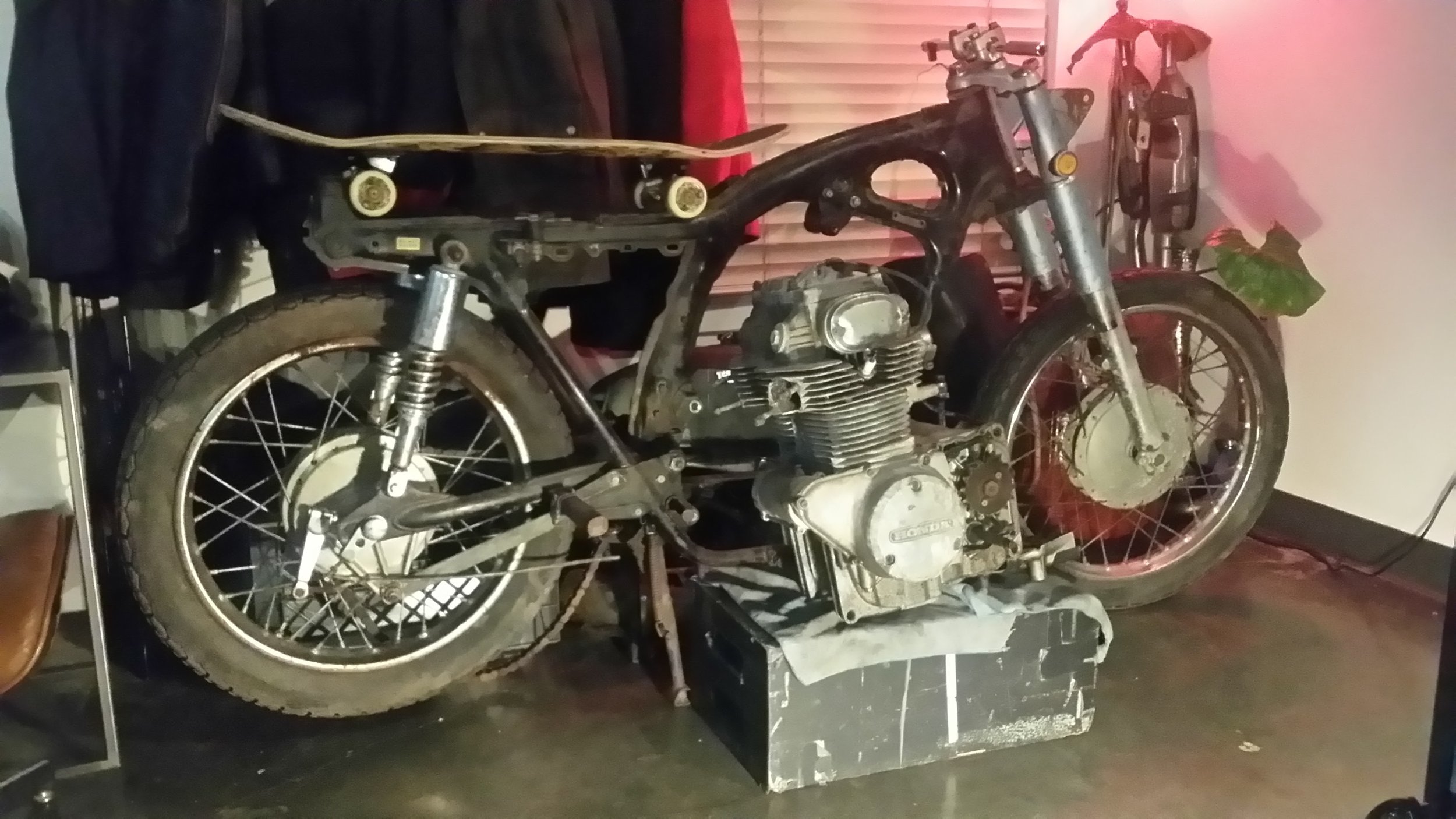
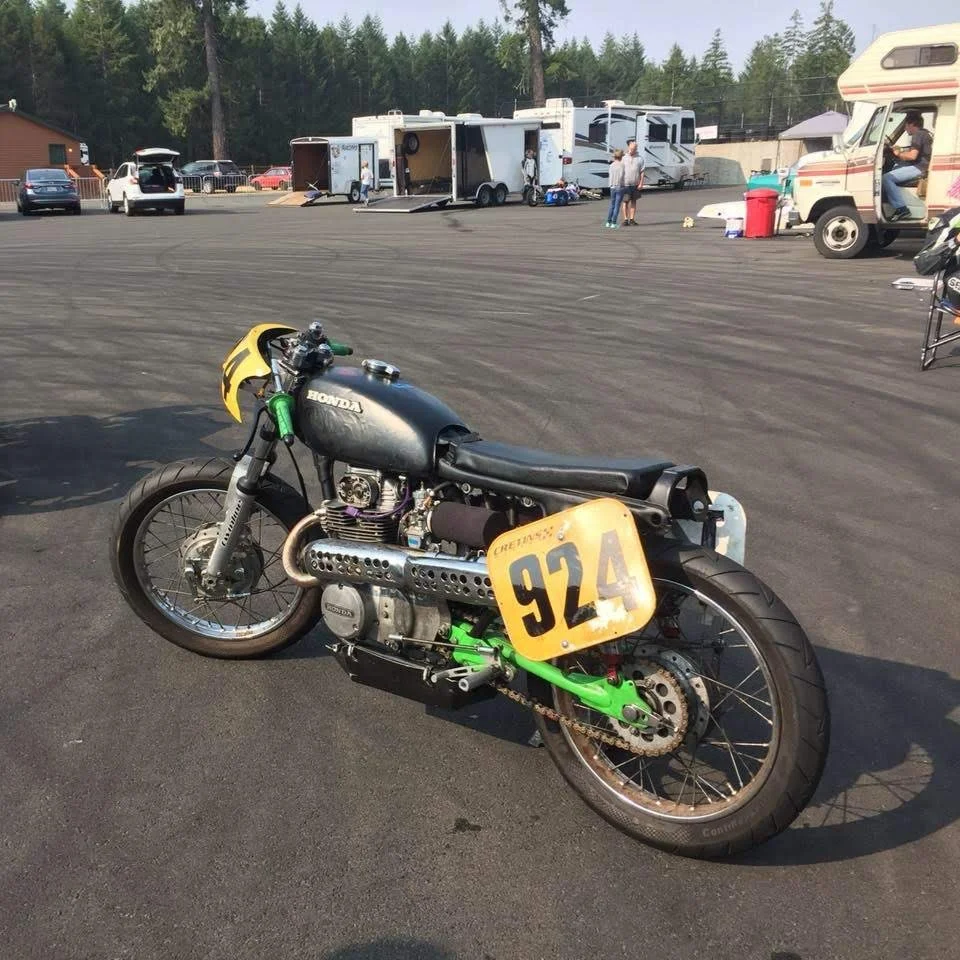
They do not make a 1972 CB350 that is race-ready, you must build it. With the help of my friend Motor Jones, a cool, old-school motorcycle racer, I was able to take an old beat-up bike and completely transform it into a race bike. The process taught me about engines, suspension, frames, but mainly, it gave me the confidence to just go for it. Prior to this, I never would have split open an engine case, but once you do it, you realize that there is no magic keeping the engine together; it is just parts and good engineering that work together to create a system. If a part fails, you can usually fix it or replace it. This applies to the whole motorcycle. No wizardry, just an awesome machine that can take you on great adventures.
SIGNAL FLOW
Bike will not start
Is the key/ignition switched to the on position? Easy fix
Do the headlights turn on or flicker? Dim lights mean the battery is weak
Is the battery charged? Use a multimeter to check for voltage but especially the amps
Is the fuel pump working? There’s usually a clicking sound next to the tank when you turn the key
Is there a fuse for the ignition system and is it blown? There are usually a couple of spares in the fuse box
Is there a fuel valve/petcock, and is it on? Can’t start an engine without fuel
Still no luck? Sell it and buy a new bike. This bike is a pile and the new DRZ looks badass
Actually… you forgot about the start button. It needs to be set to the ON position
Apply this method of thinking next time you’re in a bind, you might be able to keep the fun going or save a few bucks